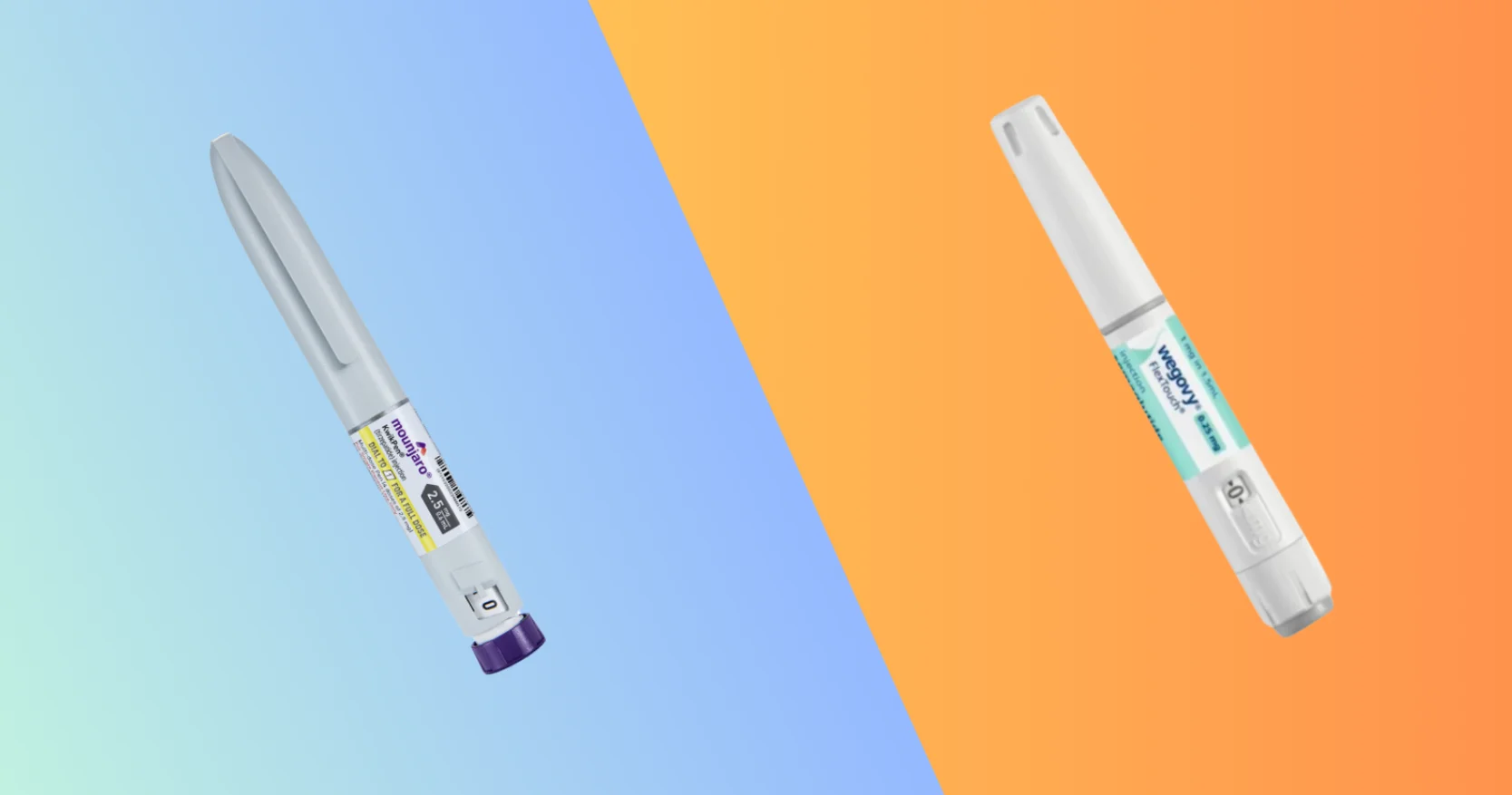
If you're researching Wegovy vs Mounjaro, you're likely trying to decide between two of the most talked-about injectable medications for weight management. Both belong to a class of drugs that mimic natural gut hormones to control appetite and blood sugar, but they aren't identical. This guide breaks down how each drug works, their benefits, injection-site irritation differences, side effects, cost, and everything else you need to make an informed decision with your doctor.
Quick Overview: What Are Wegovy and Mounjaro?
Wegovy contains semaglutide, a GLP-1 (glucagon-like peptide-1) receptor agonist made by Novo Nordisk. It is FDA-approved specifically for chronic weight management in adults and adolescents aged 12 and older with obesity or weight-related conditions, and is also approved to reduce cardiovascular risk in certain adults.
Mounjaro contains tirzepatide, made by Eli Lilly. It is a dual GIP/GLP-1 receptor agonist, meaning it activates two hormone pathways instead of one. Mounjaro is FDA-approved for managing blood sugar in type 2 diabetes; when it's used for weight loss, that use is considered off-label (Eli Lilly's identical tirzepatide product approved specifically for weight loss is sold under the brand name Zepbound).
Wegovy vs Mounjaro: Side-by-Side Comparison
| Feature | Wegovy (semaglutide) | Mounjaro (tirzepatide) |
|---|---|---|
| Manufacturer | Novo Nordisk | Eli Lilly |
| Mechanism | GLP-1 receptor agonist (single pathway) | Dual GIP/GLP-1 receptor agonist |
| FDA-approved use | Chronic weight management, cardiovascular risk reduction | Type 2 diabetes (weight loss is off-label) |
| Administration | Once-weekly injection (tablet form also available) | Once-weekly injection |
| Average weight loss (highest dose) | Around 17.5–20.7% of body weight, depending on dose | Around 20–22.5% of body weight at 15 mg |
| Common side effects | Nausea, vomiting, diarrhea, constipation | Nausea, vomiting, diarrhea, constipation |
| Injection-site reaction | Reported, generally mild | Reported, generally mild but slightly more common in some trials |
| List price (approx.) | Higher list price, but savings programs available | Slightly lower list price, savings programs available |
Why Choose Wegovy?
- FDA-approved specifically for weight loss in adults and select adolescents, along with cardiovascular risk reduction, giving it a broader approval profile for non-diabetic patients.
- Longer real-world track record for chronic weight management, since it reached the weight-loss market before tirzepatide-based options.
- Oral tablet option exists in addition to the injectable pen, which may appeal to people who prefer not to inject.
- Backed by large outcome trials showing sustained weight loss and heart-health benefits over time.
Why Choose Mounjaro?
- Dual hormone action (GIP + GLP-1) appears to produce greater average weight loss and improved blood sugar control compared to single-pathway drugs in several head-to-head studies.
- Strong option for type 2 diabetes, since this is its primary FDA-approved indication.
- Many patients report faster appetite suppression at comparable doses, though individual response varies.
- Often available at a somewhat lower list price than Wegovy, though actual cost depends heavily on insurance and pharmacy.
Benefits Comparison
Both drugs share core benefits: significant weight loss, improved metabolic markers, reduced appetite, and better blood sugar regulation. Where they tend to differ:
- Weight loss magnitude: Mounjaro has shown a modest edge in average percentage weight loss in several trials, largely attributed to its dual-hormone mechanism. However, Wegovy's newer higher-dose formulation has narrowed this gap considerably.
- Cardiovascular protection: Wegovy carries specific FDA approval for reducing major cardiovascular events in adults with established heart disease and obesity or overweight — a distinction Mounjaro does not yet hold, though outcome trials are ongoing.
- Diabetes management: Mounjaro's core approval and clinical data are strongest for blood sugar control, making it a natural first choice for many with type 2 diabetes.
Side Effects and Irritation Differences
Both medications share a similar gastrointestinal side-effect profile because both slow gastric emptying and affect appetite hormones. Common side effects include:
- Nausea
- Vomiting
- Diarrhea or constipation
- Stomach pain or bloating
- Fatigue
Injection-site irritation is a key differentiator some users notice. Both drugs can cause redness, itching, swelling, or mild bruising at the injection site. Anecdotally and in some trial data, Mounjaro's injection reactions are reported slightly more frequently, possibly due to its formulation and dual-receptor activity triggering a more noticeable local immune response. Wegovy's injection-site reactions tend to be described as milder and less frequent, though this varies by individual.
Both drugs carry a boxed warning regarding a potential risk of thyroid C-cell tumors, based on animal studies; it is currently unknown whether this risk translates to humans, and both are contraindicated for people with a personal or family history of medullary thyroid carcinoma or Multiple Endocrine Neoplasia syndrome type 2. Other shared risks include pancreatitis, gallbladder problems, and increased heart rate. Anyone considering either medication should discuss their full medical history with a healthcare provider before starting treatment.
Other Key Comparison Factors
Dosing and Titration
Both medications start at a low dose that is gradually increased over several weeks to minimize gastrointestinal side effects. Wegovy typically titrates up to a 2.4 mg (or higher-dose 7.2 mg) maintenance dose, while Mounjaro titrates up to a maximum of 15 mg weekly.
Cost and Insurance Coverage
List prices for both drugs run over $1,000 per month without insurance, though this fluctuates by region and pharmacy. Manufacturer savings cards can significantly lower out-of-pocket costs for eligible patients with commercial insurance. Coverage without a documented medical need (such as diabetes or a qualifying BMI) is often limited, so checking with your insurance provider is essential.
Availability and Supply
Both drugs have experienced periods of shortage due to high demand. Availability can vary by pharmacy, region, and dose strength, so it's worth confirming stock with your prescribing provider or pharmacy before starting treatment.
Who Should Avoid These Medications
Neither drug is recommended for people who are pregnant, breastfeeding, or have a personal or family history of certain thyroid cancers. People with a history of pancreatitis or severe gastrointestinal disease should discuss risks carefully with their doctor.
Wegovy vs Mounjaro: Which Should You Choose?
There's no universal answer to the Wegovy vs Mounjaro debate — the right choice depends on your health history, goals, and how your body responds to treatment:
- Choose Wegovy if you want an FDA-approved weight-loss drug with added cardiovascular risk-reduction benefits, or if you prefer having an oral tablet option.
- Choose Mounjaro if you have type 2 diabetes and want a drug specifically approved for blood sugar control, or if clinical data on maximum weight loss potential matters most to you.
Ultimately, both medications are effective tools for weight management and metabolic health when combined with lifestyle changes. A licensed healthcare provider can help determine which option aligns best with your medical history and goals.
Frequently Asked Questions
Is Mounjaro more effective than Wegovy for weight loss? In several clinical comparisons, Mounjaro has shown slightly greater average weight loss at maximum doses, though Wegovy's higher-dose formulation has closed much of that gap.
Which causes more injection-site irritation, Wegovy or Mounjaro? Both can cause mild redness, itching, or swelling at the injection site. Some data and user reports suggest Mounjaro reactions are slightly more common, but individual experiences vary.
Can I switch from Wegovy to Mounjaro or vice versa? Switching between these medications should only be done under medical supervision, since dosing schedules and titration are different.
Is Mounjaro approved for weight loss? Mounjaro itself is FDA-approved for type 2 diabetes; using it for weight loss is off-label. Eli Lilly markets the same active ingredient (tirzepatide) under the brand name Zepbound, which is specifically approved for weight management.