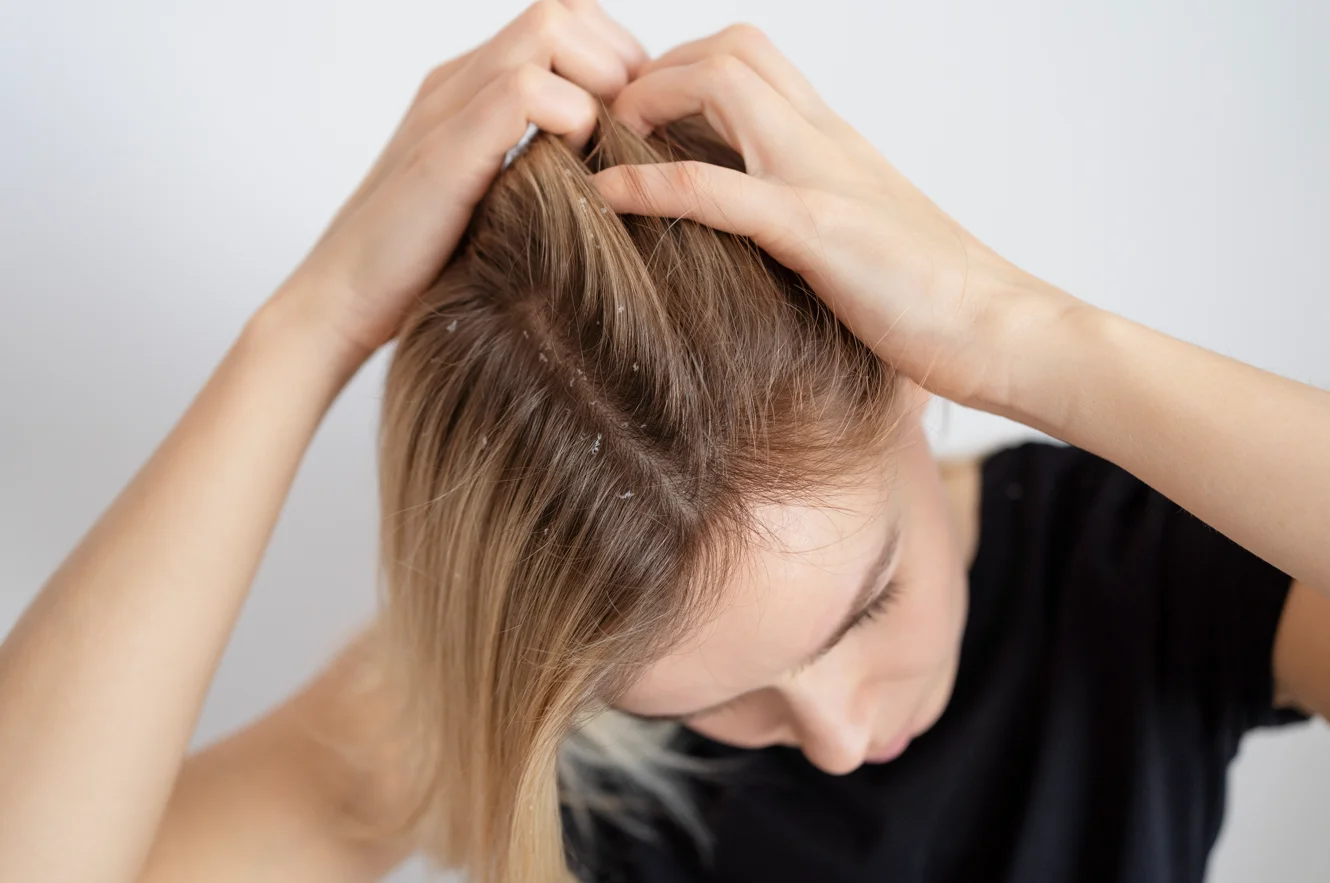
Hair loss and dandruff frequently coexist, raising a lot of concerns and inquiries. But are they just uncomfortable roommates on your scalp, or does one lead to the other?
Let us discuss the true relationship between dandruff and hair loss, whether to be concerned, and what to do if your scalp seems to be rebelling.
Summary
-
Can Dandruff Eventually Cause Hair Loss?
-
How Much Hair Loss Is Common
-
When You Should Be Concerned About Treating Dandruff to Preserve Your Hair
-
What Happens If Hair Does not Regrow?
-
Handling Hair Loss and Dandruff Together
Can Dandruff Eventually Cause Hair Loss?
Knowing how your hair development cycle functions might help you determine whether dandruff can cause hair loss. Anagen (growth), catagen (transition), and telogen (rest) are the three stages of hair development that occur naturally. You have strands in each of these stages at any given time, so shedding a little every day is very natural.
Persistent dandruff can disrupt this cycle, while sporadic flaking won't. Dandruff can cause inflammation of your scalp, particularly if it is associated with fungal infections or seborrheic dermatitis. This inflammation has the potential to cause thinning by irritating hair follicles and interfering with the regular growth cycle over time.
However, it is more than just dandruff. Stress, hormonal changes, and genetics are common factors for scalp problems. For example, imbalances may intensify changes in your hair if you are going through menopause or receiving hormone therapy. Because of this, it is crucial to consider the wider picture when identifying the underlying cause of the issue.
Frequent scratching due to an itchy scalp may occasionally cause mechanical damage or breaking. Aggressive brushing or friction can thin out hair around the front or crown over time, though you might not notice it at first.
It serves as a reminder that the physical care you provide your scalp is just as important as the products you employ. Additionally, dandruff can tip the scales when combined with other variables already harming hair health, even though it is not necessarily the primary cause.
How Much Hair Loss Is Common
When you notice a clump of hair on your brush or in the shower drain, it is natural to become alarmed. The truth is that most adults can tolerate losing between 50 and 100 hair strands every day. However, dandruff is probably not the primary cause if your shedding does not change and you do not see any thinner or larger patches.
Having said that, it is critical to be mindful of your body. Attention should be given to any sudden shedding spikes or obvious thinning, particularly in the area surrounding the temples, crown, or portion. To rule out underlying problems, a dermatologist or trichologist should be consulted at that point.
When You Should Be Concerned About Treating Dandruff to Preserve Your Hair
Do not delay if you are experiencing flaking, irritation, and more shedding. The greatest way to maintain the health of your scalp and hair is to treat dandruff as soon as possible. Start with over-the-counter shampoos that have active chemicals such as zinc pyrithione, salicylic acid, selenium sulfide, or ketoconazole. If you do not see results right away, switch between a couple, but do not give up too soon. Improvements from most treatments take time to manifest.
Use a mild scalp oil or serum that moisturizes without blocking follicles in addition to wash. Breaking the cycle of inflammation can be achieved in large part by maintaining a clean and balanced scalp. A good hair care regimen that stays away from severe heat, sulfates, and treatments with a lot of alcohol can nevertheless have a significant impact.
In the end, treating the underlying reasons of hair loss shields your hair from needless damage. A professional can evaluate if dandruff is non-scarring or scarring in nature and decide whether transplantation is necessary if patchy thinning continues after treatment.
Handling Hair Loss and Dandruff Together
In particular, if hair density has not increased after six to twelve months, many patients look into hair restoration methods. Restoring lost volume is now simpler and more natural-looking than ever because to advancements in transplant procedures. You can look at actual before-and-after pictures of transplants to observe the actual outcomes. Particularly for people with uneven thinning brought on by persistent scalp inflammation, the variations are noticeable.
Cost, of course, is a factor in that choice. In order to avoid any surprises, you should study the costs and inclusions of hair transplants, including consultations, post-operative care, and the quantity of grafts. To make the procedure more accessible, several clinics also provide flexible payment options.
Handling Hair Loss and Dandruff Together
It is critical to keep in mind that dandruff does not directly contribute to hair loss. However, if left unchecked, it does exacerbate a challenging situation. Consider your hair as the plants sprouting out of the soil that is your scalp. Even the strongest hair strands may not be able to flourish if your scalp is itchy, flaky, or inflamed.
Normal shedding can turn into visible hair loss when dandruff is combined with other risk factors, such as age, stress, heredity, or hormonal changes. Because of this, it is wise to treat scalp problems as more than just a cosmetic annoyance. You do not need to solve it on your own. See a professional if you have used anti-dandruff medications for four to six weeks without seeing any improvement. They can assist in determining whether the condition is psoriasis, seborrheic dermatitis, or something else entirely. Start with a reputable hair loss clinic that offers medical knowledge and treatment alternatives if you are searching for long-term solutions.
It can be quite difficult to manage both dandruff and hair loss at the same time. Your confidence begins to decline during routine tasks like combing your hair, dressing, or even staring in the mirror, and your aggravation grows when you have tried several items with little success. However, you are not helpless. You can protect your hair, calm your scalp, and determine what is going on if you have the right information and perseverance.